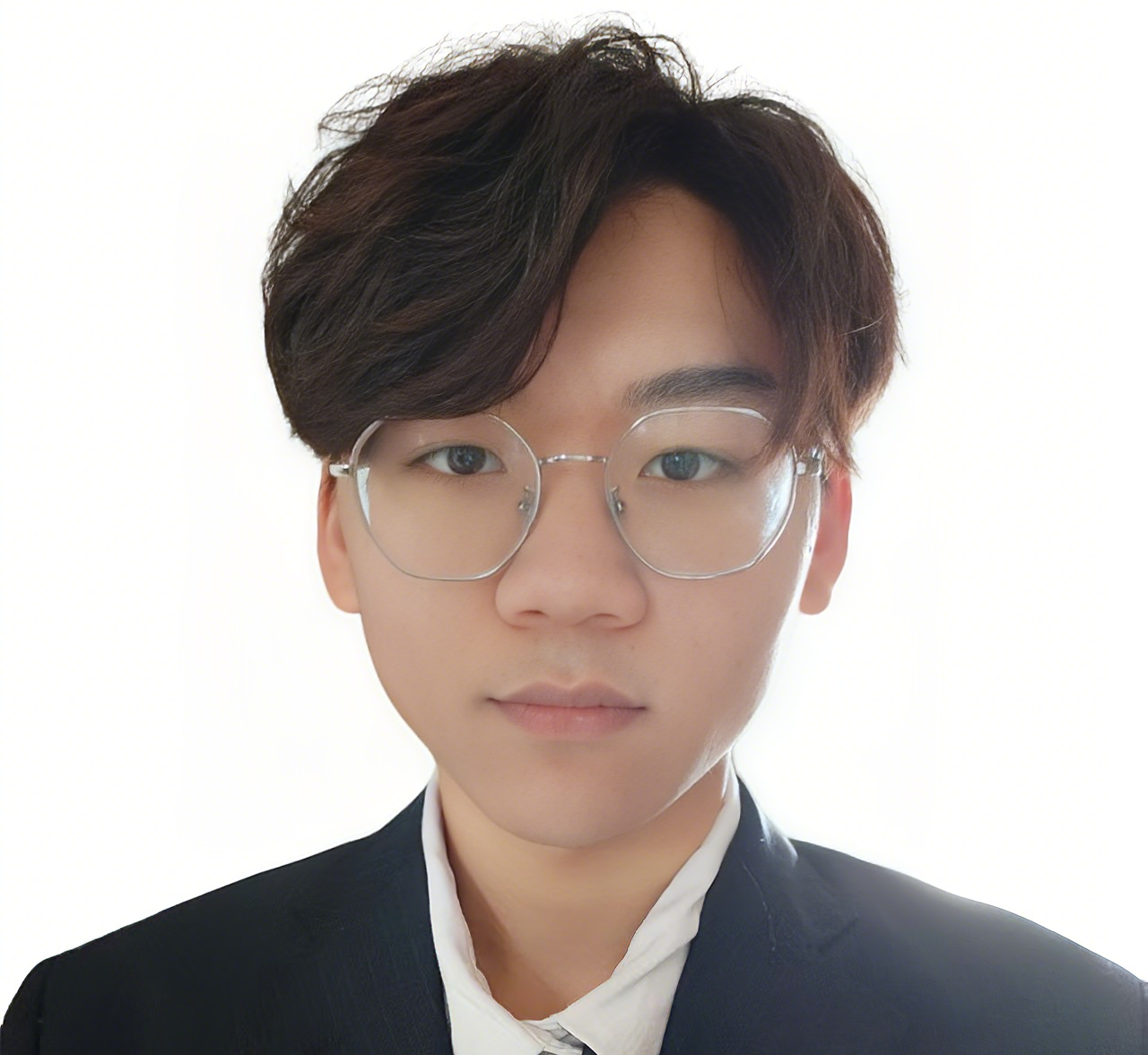
Master’s Researcher in AI-Guided Materials Discovery for Energy Storage
I am a master’s student at Tianjin University and expect to graduate in June 2027. My research combines machine learning, large language models, density functional theory, and electrochemical domain knowledge to accelerate materials discovery for electrochemical energy storage. My current primary focus is AI-assisted design of lithium–sulfur battery catalysts, while I also have experience in data-driven hard-carbon research for sodium-ion batteries. My recent first-author study on two-stage LLM fine-tuning for lithium–sulfur catalyst discovery has been accepted for publication in Materials Today Energy. I am seeking fully funded PhD opportunities starting in August/Fall 2027.
Research Interests
My research focuses on AI-enabled materials design for electrochemical energy storage. I develop data-driven workflows that integrate machine learning, large language models, density functional theory, and materials-domain knowledge to identify structure–processing–performance relationships, screen promising material candidates, and generate experimentally and computationally testable design hypotheses. Lithium–sulfur battery catalysts are my current primary research system. In addition, my previous work on hard carbon for sodium-ion batteries demonstrates the applicability of these approaches across different battery chemistries.
Current Research
My current research focuses on two directions in AI-guided materials discovery for electrochemical energy storage:
Physics-informed machine learning for coordination-engineered catalysts: I am developing interpretable descriptors and robust machine-learning workflows to connect catalyst composition, local coordination environment, electronic structure, and electrochemical performance. Current work focuses on target definition, duplicate-condition handling, missing-data treatment, physically meaningful descriptor construction, model validation, candidate ranking, and DFT-based mechanistic verification, using single-atom catalysts for lithium–sulfur batteries as the primary research system.
LLM-assisted literature-driven catalyst screening: I developed a two-stage domain-specific fine-tuning framework for evaluating catalysts reported in lithium–sulfur battery literature. The workflow integrates scientific-document processing, paper-aware data extraction, multidimensional catalyst scoring, lightweight model fine-tuning, external consistency evaluation, and mechanistic analysis. The associated first-author manuscript was accepted for publication in Materials Today Energy in July 2026.
Technical Skills
- Machine learning and data analysis: Python, pandas, NumPy, scikit-learn, XGBoost, feature engineering, missing-data imputation, cross-validation, hyperparameter optimization, and SHAP-based model interpretation.
- Large language models and scientific text processing: LoRA-based fine-tuning, domain-specific dataset construction, scientific literature processing, prompt and model evaluation, and literature-derived screening workflows.
- Computational materials science: VASP, density functional theory, structural relaxation, adsorption-energy calculations, electronic-structure analysis, and atomistic modelling of catalyst–polysulfide interactions.
- Battery materials and electrochemistry: Lithium–sulfur batteries, sodium-ion hard carbon, single-atom catalysts, coordination-environment analysis, sulfur-redox catalysis, electrochemical-performance data processing, and structure–property interpretation.
- Research computing: Linux, Git, GitHub, scientific-data management, reproducible workflow development, and computational task automation.